

Did you know that over 90% of taxpayers miss out on eligible tax deductions or credits each year, leaving thousands of dollars with the IRS? Don’t let your hard-earned money slip away—learn how strategic tax planning can lead to bigger refunds and better financial outcomes!
Unlocking Tax Planning: Surprising Facts That Impact Your Tax Return
Tax season doesn’t have to be stressful or uncertain if you understand the keys to effective tax planning. Most Americans are unaware of the many opportunities available to legally minimize their tax burden. In fact, tax law is structured to reward careful planning and informed decisions, which can make a substantial difference in your annual tax return. The majority of filers merely “set and forget” their financial documents, missing out on strategic moves that reduce taxable income, unlock valuable tax credits, and increase the odds of a larger refund.
A proactive approach to tax planning involves more than just filing forms; it requires year-round attention to changing tax rates, evolving deductions, and new legislation. By focusing on the essential aspects—such as understanding your tax bracket, leveraging credits like the Child Tax Credit or energy efficiency incentives, and contributing pre-tax dollars to retirement or health accounts—you can turn tax time into an opportunity instead of a burden. Let’s break down the actionable strategies that will leave more money in your pocket and less with the IRS.
"Over 90% of taxpayers miss out on eligible tax deductions or credits each year, leaving thousands of dollars with the IRS."

What You'll Learn About Tax Planning Secrets for Bigger Refunds
- How tax planning can maximize your tax return
- Key strategies for reducing taxable income
- The difference between tax credits, tax deductions, and the standard deduction
- Tips on strategic tax moves before year-end
- Common tax planning mistakes to avoid
Understanding the Basics: What Is Tax Planning?
Tax Planning Defined: Key Principles and Goals
At its core, tax planning is the process of organizing your finances to minimize the amount of tax you owe, within the allowed framework of tax law. Whether you’re a W-2 employee, self-employed, or have multiple income streams, the primary goal is to reduce your overall tax burden and maximize available tax benefits each year. This involves analyzing your income, expenses, investments, and eligible deductions across the calendar year rather than waiting until tax season. Key principles include timing your income and deductions, choosing between itemized and standard deduction, and utilizing features such as pre-tax retirement plans, health savings accounts (HSAs), and tax credits.
A successful tax planning strategy begins with an understanding of your personal or household financial situation. Reviewing your filing status, salary, side hustle income, and even investment capital gains helps you forecast your tax rate and make informed decisions. Ultimately, tax planning is about taking control, not just reacting—with the right plan, you can unlock tax benefits, make smarter financial moves throughout the year, and pave the way for a larger tax return come spring.
The Impact of Tax Planning on Your Tax Return
Tax planning is directly tied to the size of your tax return. If you wait until tax season to consider deductions or credits, you may miss simple opportunities to increase your refund or avoid unexpected liabilities. For example, utilizing pre-tax contributions to IRAs, maximizing employer-sponsored retirement plan benefits, or tracking ever-changing IRS rules (such as the $600 rule for gig workers) can significantly impact your bottom line.
Even small changes, like adjusting payroll withholdings, bunching charitable contributions, or strategically taking capital losses, can reduce your taxable income. The IRS doesn’t automatically optimize your results—you must proactively leverage the law to your advantage. By taking control and using tax planning tools and advice, you’re more likely to receive every benefit you’ve earned, putting you in the best position for a strong, well-earned refund.

The Five Pillars of Tax Planning for Bigger Refunds
- Strategic tax timing
- Understanding tax brackets
- Maximizing tax deductions
- Utilizing tax credits
- Reducing taxable income
| Feature | Tax Credits | Tax Deductions | Standard Deduction |
|---|---|---|---|
| How it reduces your tax | Directly lowers your tax bill, dollar for dollar | Lowers your taxable income before calculating your tax | Flat amount that reduces taxable income, varies by filing status |
| Examples | Child Tax Credit, Earned Income Tax Credit | Mortgage interest, charitable contributions | Set by IRS each year: higher for those 65+ or blind |
| Best for | Anyone eligible for credits | Taxpayers with eligible deductions exceeding standard deduction | Most taxpayers who can't itemize |
Strategic Tax Moves: Timing and Your Tax Bracket
Tax Bracket Awareness: Why Small Changes Matter
Understanding your tax bracket is one of the most effective ways to reduce your tax burden. Tax brackets are thresholds that determine how much of your income is taxed at different rates. In the United States, the federal tax system is progressive—your tax rates increase as you earn more, but only for the income that falls within each bracket. This means that some simple adjustments, like deferring a bonus or claiming extra deductions before year-end, can keep more of your earnings in a lower tax rate bracket.
For example, if a one-time bump in income puts you into a higher bracket, your entire income isn’t taxed at that rate—only the income above the threshold. That’s why smart timing is so important: you can accelerate or delay income and deductions to “bunch” your taxable events advantageously. Being aware of your income tax level helps you avoid crossing into a new bracket unnecessarily and potentially keeps your refund higher and your total tax liability lower.

Defer or Accelerate Income? Key Tax Planning Strategies
One of the cornerstones of strategic tax planning is deciding whether to defer or accelerate income and expenses. If you expect to be in a lower tax bracket next year—perhaps due to retirement, a career change, or reduced hours—deferring income (like bonuses or freelance payments) makes sense; you’ll pay a lower tax rate when that income is received. Conversely, if you suspect your taxes will rise next year due to life changes or shifts in tax law, it’s often wiser to accelerate income into the current year to lock in a lower rate.
You can also accelerate deductions, such as paying property taxes or making planned charitable contributions in December rather than January, thereby reducing your current year’s taxable income. This approach, called bunching, is effective for taxpayers near the threshold for itemizing deductions. Whether you choose to defer or accelerate, understanding these timing strategies ensures you’re paying only what you owe—never more—each tax season.
Maximizing Refunds: Top Tax Deductions You Should Know
- Above-the-line tax deductions
- Itemized vs. standard deduction choices
- Common overlooked deductions for individuals and families
Tax deductions play a pivotal role in tax return optimization by lowering your adjusted gross income (AGI). "Above-the-line" deductions, like contributions to a Traditional IRA, student loan interest, and HSA deposits, reduce your AGI regardless of whether you take the standard deduction or itemize. The decision to itemize or use the standard deduction should be based on which option provides a greater tax benefit; with the standard deduction rising nearly every year, however, many filers default to it instead of weighing potential savings from itemizing.
Commonly overlooked deductions include educator expenses, state and local sales taxes, and certain unreimbursed medical costs. Families and individuals may also miss credits tied to property taxes or energy efficiency improvements. Knowing which deductions you’re eligible for—and tracking them throughout the year—ensures you never leave money on the table, leading directly to a bigger refund when you file.
Unlocking Savings: The Most Valuable Tax Credits
- Earned Income Tax Credit
- Child Tax Credit
- Education tax credits
- Energy-efficient home credits
While tax deductions lower your taxable income, tax credits provide a dollar-for-dollar reduction of your tax bill, making them some of the most powerful tools available to taxpayers. The Earned Income Tax Credit (EITC) offers significant relief for low- and moderate-income workers. The Child Tax Credit dramatically increases refunds for families with dependents, while education credits—like the American Opportunity or Lifetime Learning Credit—offer direct savings for those paying tuition or related expenses.
Homeowners can also take advantage of credits for energy-efficient improvements, such as solar panels, insulation upgrades, or efficient heating systems. These incentives often change annually, so staying aware of current tax law is essential. By claiming every eligible credit, you can dramatically reduce your tax liability and unlock hidden savings in your annual filing.

Reducing Taxable Income With Strategic Tax Planning
Pre-tax Contributions: IRAs, HSAs, and More
Pre-tax contributions are among the smartest ways to reduce your tax liability while saving for the future. Contributions to accounts such as a Traditional IRA, 401(k), or Health Savings Account (HSA) reduce your gross income, meaning you’re taxed on a smaller amount. These contributions can also have a ripple effect, lowering both your federal and state income tax liabilities and even helping you avoid higher tax rates.
In addition to direct savings, making regular pre-tax contributions supports long-term financial stability by encouraging disciplined saving for retirement or health expenses. For older taxpayers, being aware of required minimum distributions (RMDs) and maximizing catch-up contributions can further enhance retirement planning and minimize taxes over time. Each dollar contributed pre-tax is a dollar that isn’t counted in your taxable income for the year, helping ensure you benefit from every deduction available.

Tax-Smart Charitable Giving Strategies
Charitable giving does more than support the community—it can also deliver substantial tax benefits. By donating cash, stock, or even property to qualified organizations, you can claim deductions that lower your taxable income. For those who itemize, “bunching” multiple years’ donations into a single tax year may unlock greater deductions without surpassing the standard deduction threshold. Gifting appreciated assets, instead of cash, allows you to avoid capital gains taxes while still receiving a deduction for the full market value.
Donors age 70½ or older may make Qualified Charitable Distributions (QCDs) directly from IRAs, which count toward required minimum distributions and are excluded from taxable income. Regardless of the method, detailed records and written acknowledgment from the charity are required. By incorporating giving into your overall tax planning strategy, you maximize your impact while reducing your tax bill—an absolute win-win.
Understanding the $600 Rule in Tax Planning
How the $600 Rule Affects Independent Contractors and Side Hustles
The $600 rule refers to an important threshold in tax law for gig economy workers, freelancers, and small business owners. If you receive $600 or more in payments for services from a business or client in a calendar year, they must issue you a 1099-NEC form to report this to the IRS. This rule affects not just traditional contractors, but anyone with side hustles, online gigs, or project-based income.
Failing to account for this income can lead to IRS penalties and unexpected tax bills during filing season. To avoid surprises, track all sources of income—especially those not reported on W-2s—and consider quarterly estimated tax payments if withholding isn’t enough. Strategic tax planning for self-employed individuals should also consider deductible expenses like home office costs, retirement plan contributions, and even certain business-related travel. By understanding the $600 rule and organizing accordingly, you stay compliant and avoid unnecessary tax headaches.

Are Tax Planners Worth It? Evaluating Professional Tax Planning
"A good tax planner doesn’t just fill out forms—they uncover opportunities for real savings tailored to you."
Tax planning can be complicated, and while do-it-yourself tax software works for many, certain financial situations call for professional expertise. If your finances include multiple income streams, investments, rental properties, or regular capital gains, or if you’re self-employed, a tax planner may save you far more than they cost.
Professional tax planners keep up with annual tax law changes, help you optimize your withholdings and deductions, and discover credits you might miss using DIY methods. They can craft custom strategies for your unique situation, helping you minimize taxes this year—and in the future. When it comes to handling the complexities of federal tax returns, maximizing credits, and ensuring compliance, having an expert in your corner is undeniably valuable.
Common Tax Planning Mistakes to Avoid for a Bigger Tax Return
- Missing deadlines on tax return and payments
- Overlooking eligible tax credits
- Failing to adjust withholdings or estimated taxes
Even the most diligent taxpayers can fall prey to common mistakes that undermine their tax return. Missing IRS deadlines for filing or estimated payments can lead to costly penalties and interest. Overlooking newly introduced or obscure tax credits—such as education or energy incentives—means you might leave significant refunds unclaimed. Additionally, failing to adjust your payroll withholdings or quarterly estimates after life changes (like marriage, a new job, or a child) often results in an unexpected bill or a smaller refund.
Staying organized and reviewing your strategy each year can help you sidestep these pitfalls, ensuring you make the most of the tax planning opportunities available and keep more money in your pocket.
People Also Ask: Tax Planning Questions Answered
What do you mean by tax planning?
Answer: Tax planning is analyzing your financial situation or plan to ensure that all elements work together to minimize taxes. Through tax planning, individuals can strategically plan their finances to optimize tax efficiency, maximize refunds, and support long-term financial goals.
What are the 5 pillars of tax planning?
Answer: The five pillars of tax planning typically include: timing income and expenses, choosing favorable tax treatments, leveraging tax deductions, utilizing tax credits, and reducing taxable income through pre-tax contributions and investment choices.
What is the $600 rule?
Answer: The $600 rule refers to the IRS requirement that businesses must issue a 1099-NEC form to independent contractors or non-employees paid $600 or more during the tax year for services rendered.
Are tax planners worth it?
Answer: For most individuals and small business owners, engaging a tax planner is worth the investment if they have a complex financial situation, multiple income streams, or want to optimize refunds and avoid common pitfalls. Tax planners can uncover savings that often far outweigh their fees.
FAQs About Tax Planning and Tax Return Optimization
-
When should I start tax planning for the next year?
Ideally, tax planning should begin early in the year to fully take advantage of credits and deductions as your financial situation changes. Proactive planning allows for adjustments in withholdings, estimated payments, and maximizing retirement or health account contributions well ahead of filing season. -
How do tax credits differ from tax deductions?
Tax credits reduce the amount of tax you owe directly, providing a dollar-for-dollar reduction in your tax bill, while deductions reduce your taxable income, indirectly lowering your tax by decreasing the income subject to tax. -
Can tax planning help reduce self-employment taxes?
Yes, strategic tax planning can help self-employed individuals identify deductible business expenses, retirement plan contributions, and health deductions, all of which can significantly reduce self-employment taxes. -
What is the benefit of itemizing over taking the standard deduction?
If your eligible expenses—such as mortgage interest, medical expenses, and charitable gifts—add up to more than the standard deduction, itemizing can provide a greater tax benefit and further lower your taxes. -
How often should I review my tax planning strategy?
It's smart to review your tax planning strategy at least annually or whenever you experience a major life event, such as marriage, divorce, a new job, or significant changes in income or expenses.
Key Takeaways: Achieving Bigger Refunds Through Strategic Tax Planning
- Start tax planning early to maximize available opportunities
- Understand the value of both tax credits and tax deductions
- Review your taxable income and take advantage of pre-tax contributions
- Consult a professional for complex tax situations
Expert Tips for Tax Planning Success
- Keep detailed records throughout the year
- Stay informed about tax law changes
- Regularly adjust your tax withholding as your financial situation changes
- Leverage tax software or professional advice for efficiency
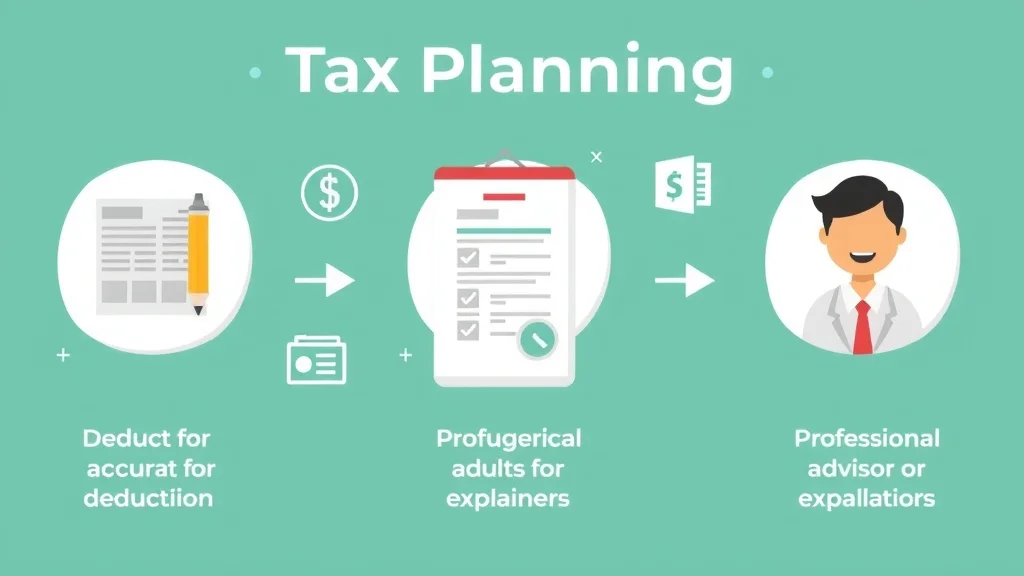
Visual: Step-by-Step Tax Planning for Bigger Refunds
Conclusion: Maximize Your Refund With Proactive Tax Planning
Take the Next Step for Bigger Refunds
Ready to uncover your tax planning opportunities? Give us a call @ 1.877.776.6829 or visit our website Conciergetax.vip today to maximize your tax return and secure your financial future.
Sources
- https://www.irs.gov/credits-deductions-for-individuals – IRS: Credits & Deductions for Individuals
- https://www.irs.gov/forms-pubs/about-form-1099-nec – IRS: About Form 1099-NEC
- https://www.irs.gov/taxtopics/tc551 – IRS: Basis of Assets
- https://www.hrblock.com/tax-center/irs/tax-law-changes/ – H&R Block: Tax Law Changes
- https://turbotax.intuit.com/tax-tips/tax-deductions-and-credits – TurboTax: Tax Deductions & Credits










Write A Comment